Your Customers Are Already Talking. The Question Is Whether You’re Listening.


Review management, Net Promoter Scores, and why many small businesses are still waiting for permission to care about feedback.
In 2014, I was one of the youngest Franchise Operations Consultants in Byrider’s then-25-year history. I was often assigned alongside senior colleagues when the training got technical, not because I was the most experienced person in the room, but because I was comfortable with the technology and they needed someone who could translate it without losing the audience.
That year, we integrated Podium with our proprietary Dealer Management Software across our 160+ location franchise network for automated review request management. It was one of the earliest deployments of that kind of platform in the auto retail space. We were early adopters in a market full of businesses that were not paying attention yet. That said, not everyone thought this strategy would work.
The pushback was real, and honestly, it was understandable. Byrider’s vertically integrated model happened to combine used car sales, subprime auto financing, and in-house repair services under one roof — three industries that consistently land in the top five most complained-about categories in America every single year. Franchise owners were not wrong to be nervous. We were asking them to proactively solicit feedback in an environment where the deck felt stacked against them from the start.
Here is what I learned in those training sessions, and what I have carried into every conversation about review management since: the software was never the hard part. Not even close.
The hard part was convincing business owners that their customers’ honest opinions were an asset, not a threat.
The Product Adoption Lifecycle and the Review Management Gap
Everett Rogers introduced the technology adoption lifecycle in 1962 with a simple but enduring observation: not everyone embraces a new product at the same time or for the same reasons. The curve he described moves from Innovators to Early Adopters to the Early Majority, then the Late Majority, and finally the Laggards, the people who adopt last, often only when they have no other choice.
Review management software has been commercially available and widely accessible since the early 2010s. Platforms like Podium, Birdeye, ReviewTrackers, and Google’s own Business Profile tools have made it easier than ever to solicit, monitor, and respond to customer feedback at scale. The technology is not new. The barrier to entry is not high. And yet, in 2024, a majority of small and mid-sized businesses in the United States still do not have a consistent, proactive review management process in place.
That is not a technology problem. That is a mindset problem.
Most business owners live inside the day-to-day demands of running an operation. They are working in the business, managing staffing, handling supply chain issues, putting out fires, and trying to make payroll. The work on the business, the strategic, proactive investment in systems that protect and grow reputation over time, gets perpetually deferred. Review management falls into that category for most of them. They know they should be doing it. They will get to it when things slow down. Things never slow down.
The result is a massive and entirely preventable gap. Early adopters built strong review profiles a decade ago and have been compounding the benefits ever since. Laggards are still waiting for a competitor’s success story to make the case for them. In the meantime, their prospective customers are reading reviews for every business they consider, and the absence of a strong review presence is itself a signal.
What Net Promoter Score Actually Measures
Net Promoter Score, developed by Fred Reichheld and introduced in a Harvard Business Review article in 2003, is one of the most widely adopted customer loyalty metrics in the world. The concept is simple: ask your customers one question, on a scale of zero to ten, how likely are you to recommend us to a friend or colleague? Respondents who answer nine or ten are Promoters. Those who answer seven or eight are Passives. Those who answer zero through six are Detractors. Your NPS is the percentage of Promoters minus the percentage of Detractors.
A score above zero means you have more promoters than detractors. A score above fifty is generally considered excellent. A score above seventy puts you in the company of the most beloved brands in the world. At NetReputation, we have maintained NPS scores consistently in the high eighties across individual, SMB, and enterprise client segments. That number did not happen by accident. It is the product of a systematic, ongoing commitment to understanding what clients actually experience and closing the gap between what we promise and what we deliver.
But here is what most businesses miss about NPS: it is not just a score. It is a feedback loop. The value of asking the question is not in the number you get back. It is in what you do with the information. Promoters need to be recognized and activated. Passives represent an opportunity to convert with relatively small improvements. Detractors, the people most businesses are afraid to engage, are often your most valuable respondents. They are telling you exactly what is broken. If you are willing to listen and respond, many of them will become your most loyal customers. The ones who never say anything and simply leave are the ones you cannot recover.
Detractors are not a threat to your business. Ignored detractors are.
Automation Gets You in the Door. Humanity Gets You the Review.
The most common mistake businesses make when they adopt a review management platform is assuming that the technology does the work. It does not. What automation does extremely well is remove the friction from the request process. It puts the ask in front of the customer at the right moment, through the right channel, without requiring a staff member to remember to do it manually every single time. That consistency is genuinely valuable.
But the review a customer writes is shaped by the entire experience they had with your business, not by the sophistication of the platform that sent them the request. If your customer service was indifferent, your review request automation will very efficiently collect indifferent reviews. If a customer had a problem that was never acknowledged, your automated follow-up will prompt them to tell the world about it. The tool amplifies what is already there. It does not create something that is not.
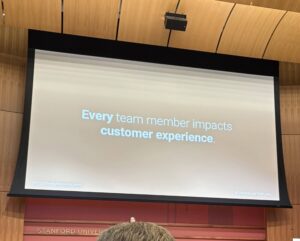
What actually moves the needle is the work that happens before the request is ever sent: training your team to have honest conversations with customers, equipping them to acknowledge complaints directly and without defensiveness, and building a culture where feedback is treated as useful information rather than a personal attack.
In those Byrider training sessions in 2013, the business owners who resisted the rollout were not afraid of the technology. They were afraid of what their customers might say. They were managing businesses where customer service issues had accumulated over years, where staff interactions were inconsistent, where problems had been handled reactively or not at all. The idea of proactively inviting customer feedback felt like opening a door they had kept firmly closed for a reason.
What I tried to help them understand then, and what I still believe today, is that those customers were already talking. They were telling their neighbors, their colleagues, and eventually the internet. The only thing a review management process does is give you a seat at that conversation. The alternative is not that the conversation stops. The alternative is that it happens without you.
“If you are proactive and genuine about your customer feedback loops, more often than not it humanizes your entire team. And when the time inevitably comes that something unexpected happens and a customer gets mad or frustrated, if they have previously humanized you, it makes it much more difficult for them to go scorched earth and demonize your team or your product or your service.”
That insight reframed everything for me. The goal of a review management program is not just to generate more reviews. It is to build enough relational equity with your customers that when something inevitably goes wrong, and something always eventually goes wrong, they extend you the benefit of the doubt rather than reaching for a torch. Businesses that have humanized their team through consistent, genuine engagement have a buffer that no crisis communications plan can manufacture after the fact. You either built that trust before the moment arrived, or you did not.
Training Staff on Difficult Conversations Is the Actual Product
Every review management platform I have ever seen deployed gets used at roughly thirty percent of its potential for the first six to twelve months. Not because the technology fails, but because the human side of the implementation is undertrained and underinvested.
The most valuable training a business can give its customer-facing staff is not how to use the software. It is how to have a difficult conversation with a customer who is upset, how to acknowledge a complaint without getting defensive, how to identify the moment when a customer’s experience is about to go sideways and intervene before it becomes a one-star review on Google.
That kind of training is uncomfortable. It requires role-playing scenarios that feel awkward, managers who are willing to model vulnerability, and a genuine organizational commitment to hearing hard things without punishing the messenger. Most businesses skip it because it is harder than installing a software platform. And then they wonder why their review profile is not improving.
The businesses that get this right treat their review feedback loop as a continuous quality improvement system. A new negative review is not a crisis to manage. It is a data point that tells you something specific went wrong at a specific point in the customer journey. You investigate it the same way you would investigate an operational failure in any other part of the business. You fix the root cause. You respond to the customer. You use what you learned to raise the bar for the next customer who walks through the door.
Done well, review management is not a reputation tool. It is a business improvement system that happens to produce a better reputation as a byproduct.
The Feedback Loop That Raises Everyone’s Game
Here is what I have watched happen, in both franchise retail environments and in online reputation management, when a business genuinely commits to this process. The first month is uncomfortable. Staff feel scrutinized. Managers feel exposed. A few reviews come in that sting. Then something shifts.
When team members see that leadership takes customer feedback seriously, not as a weapon against them but as a resource for improvement, the culture around service quality changes. Staff start paying attention differently. They begin flagging issues proactively rather than hoping they go unnoticed. They start having better conversations with customers because they have been trained on how to do it and they see evidence that it matters.
Customers feel the difference. When they see that a business reads and responds to its reviews, that it takes the time to acknowledge both the positive and the critical, they trust that business more. Trust is what converts a satisfied customer into a promoter. Promoters are the people who fill your pipeline with referrals and defend your reputation in conversations you will never hear.
The businesses that are still in the Laggard category on the product adoption curve are not behind because they lack resources or sophistication. They are behind because they have not yet made the internal decision to treat their customers’ feedback as something worth taking seriously. The technology to act on that decision has been available and affordable for more than a decade.
Where to Start
If you are a business owner who has been meaning to get serious about review management and has not yet done it, the starting point is not a software platform. The starting point is a conversation with your team about what you actually believe regarding customer feedback. Do you believe it is something to be managed and minimized? Or do you believe it is a resource that can make your business better?
If you believe the latter, the next step is training. Equip your customer-facing staff to recognize service failures in real time and address them before a customer leaves. Build a culture where surfacing a problem is rewarded, not punished. Then, and only then, add the technology that automates the request process and makes your proactive feedback culture visible to the world.
The platforms are good. They have gotten better every year. But the businesses with the strongest review profiles I have seen are not the ones with the most sophisticated technology stack. They are the ones whose team members genuinely care about the customer standing in front of them, and have been given the tools and the confidence to show it.
Your customers are already talking. The only question is whether you are part of that conversation.
David McMahon is a Sarasota-based executive with 15+ years of experience in online reputation management, franchise operations, and organizational leadership. He is VP of Client Services at NetReputation and writes about reputation, leadership, and building teams worth being part of at davidmcmahon.com.